
FAIR Principles
Visual research data are prepared for long-term storage and potential reuse. To support responsible sharing and sustainable access, many open science initiatives encourage researchers to follow the FAIR principles, which aim to make research data Findable, Accessible, Interoperable, and Reusable.
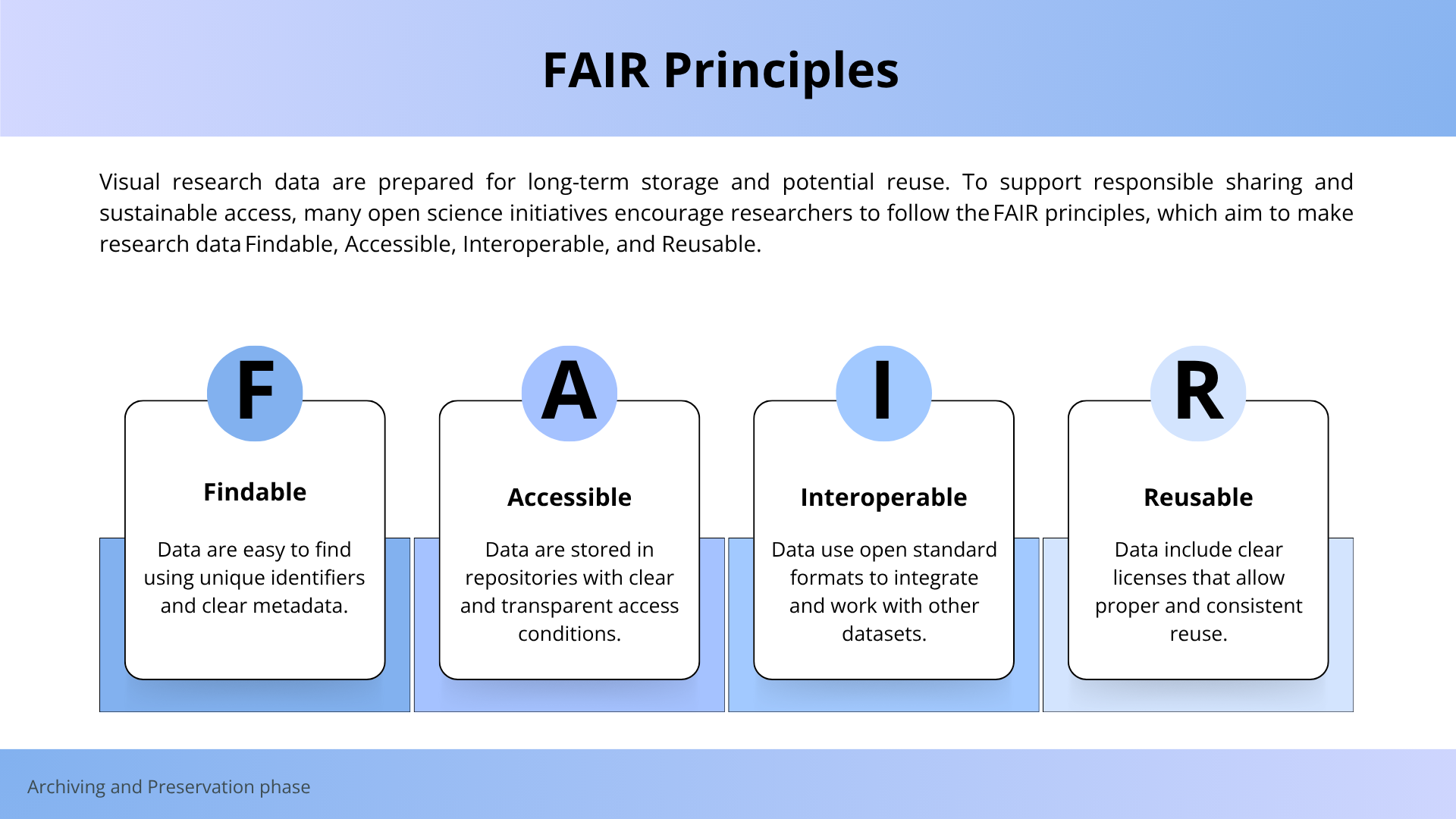
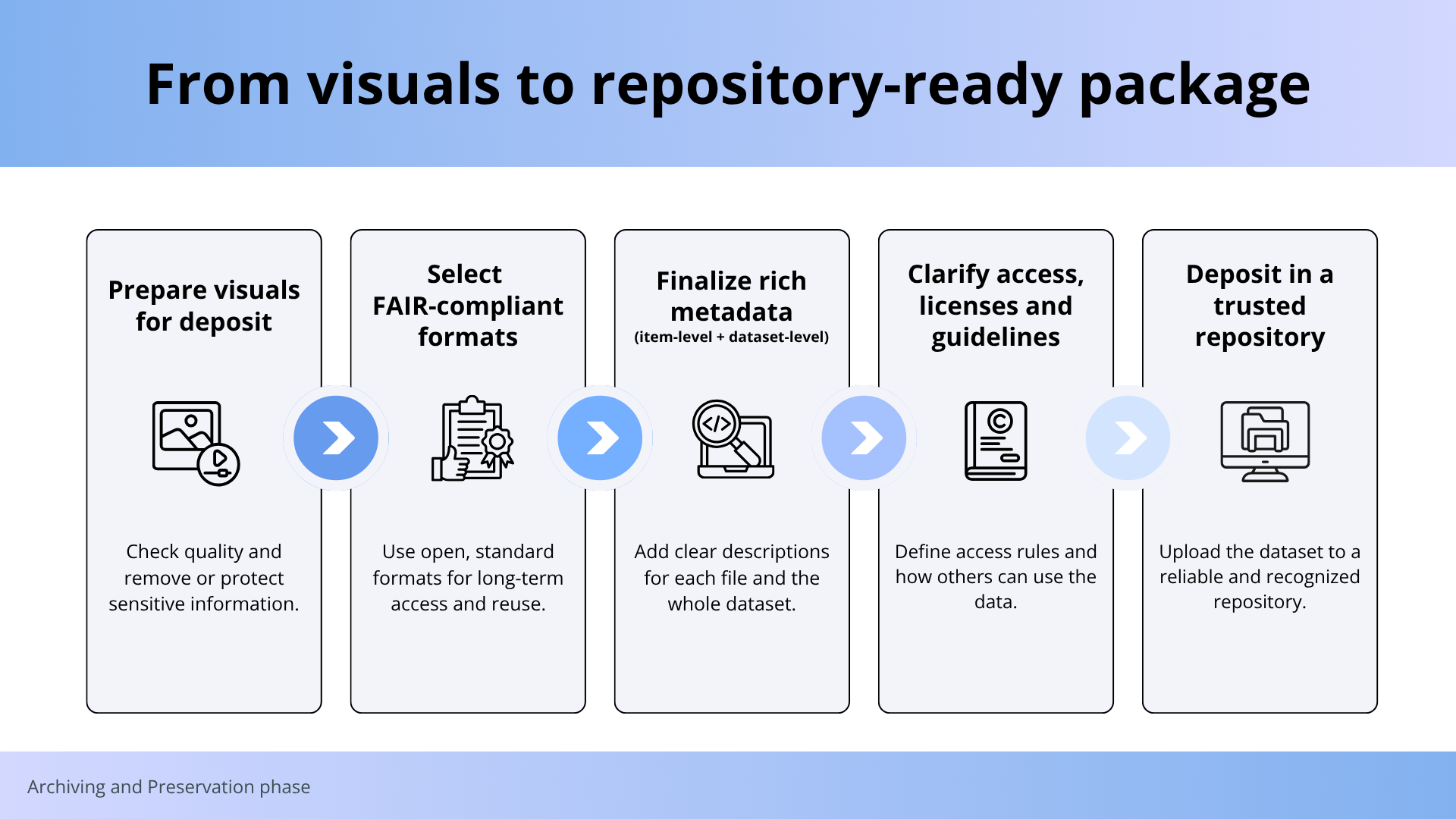
Applying these principles to visual social research requires careful preparation of visual materials and their accompanying documentation. Visual datasets should be described with appropriate metadata and persistent identifiers (e.g., Digital Object Identifier DOI) so that they can be discovered and properly understood by other researchers over time. These elements make visual data findable and provide essential contextual information for interpretation.
The FAIR framework also emphasizes that research data should be accessible through suitable data repositories and clearly defined access conditions. Because visual materials often involve ethical and legal sensitivities, access may need to be carefully managed to ensure that sharing practices remain aligned with ethical responsibilities and data protection requirements.
To enable integration and future analysis, visual data should be stored in non-proprietary formats that facilitate interoperability across platforms and research environments. Finally, clear licensing and documentation are necessary to allow others to understand how visual data can be reused and under which conditions.