Research Paradigm
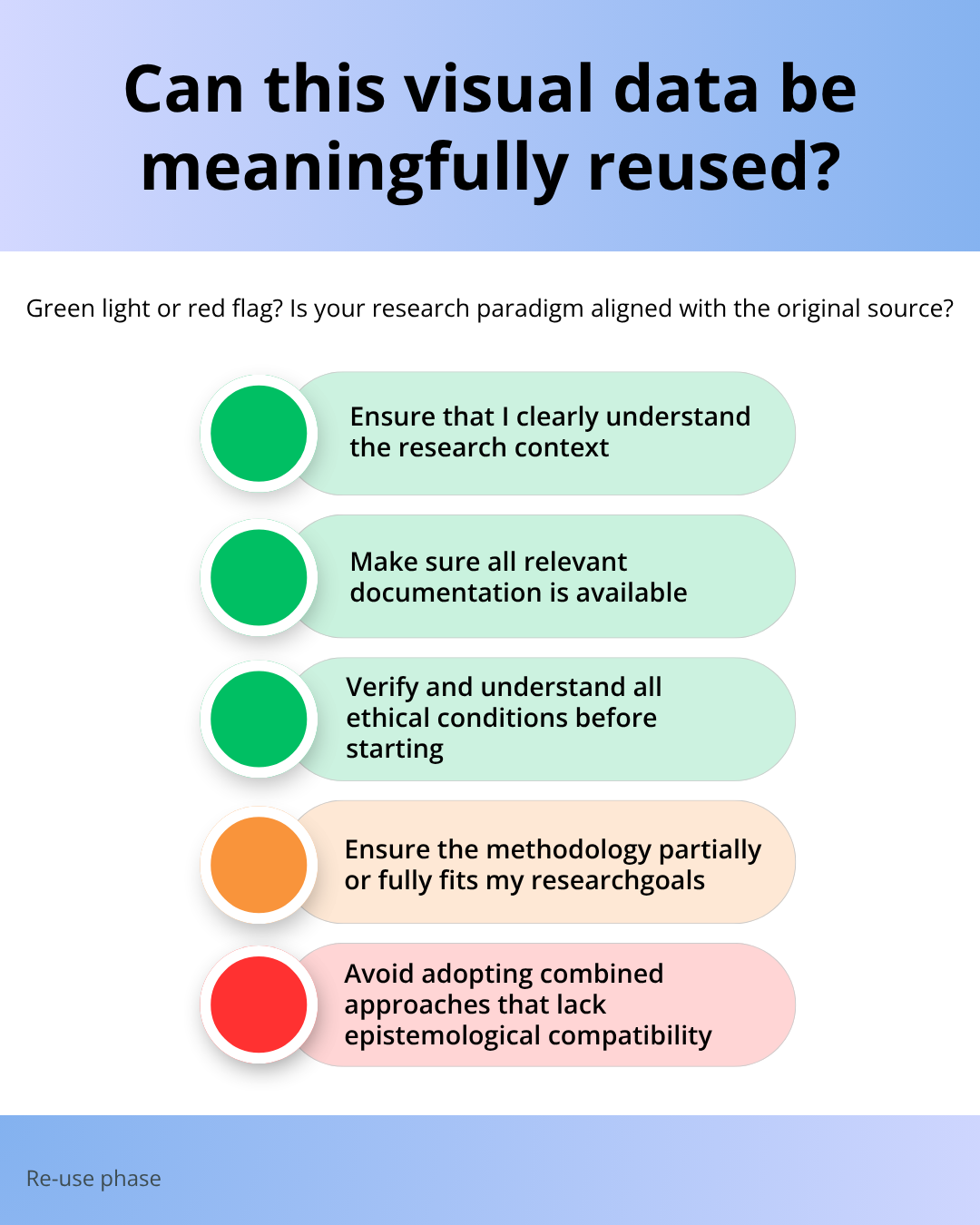
Before reusing visual datasets, researchers must understand the research paradigm in which those visuals were originally created, selected, and interpreted. Visual data are not neutral objects independent of their initial study; their meaning is closely connected to the methodological assumptions, analytical goals, and relationships that influenced their production.
Therefore, secondary use involves assessing whether the epistemological stance of the new project aligns with that of the original. Researchers should consider if the available visual materials, documentation, and original production conditions offer a meaningful foundation for the new research objectives. Reuse is methodologically sound only when the original research context is adequately understood and can be integrated into the new analytical framework.
This reflection is especially crucial in visual social research, where contextual sensitivity, identifiability, and ethical considerations are still linked to the data even after publication. Reusing visual data thus requires respecting access and consent conditions and assessing whether the original study’s paradigm supports responsible and coherent secondary analysis.