
Minimizing harm
In the conceptual phase, researchers define the values and assumptions that will guide the project. This includes reflecting on how visual data may affect participants, how it will be handled, and under which conditions it might later be shared or reused.
At this stage, minimizing harm is not yet about concrete procedures. It is about setting an ethical orientation that will shape decisions throughout the project.
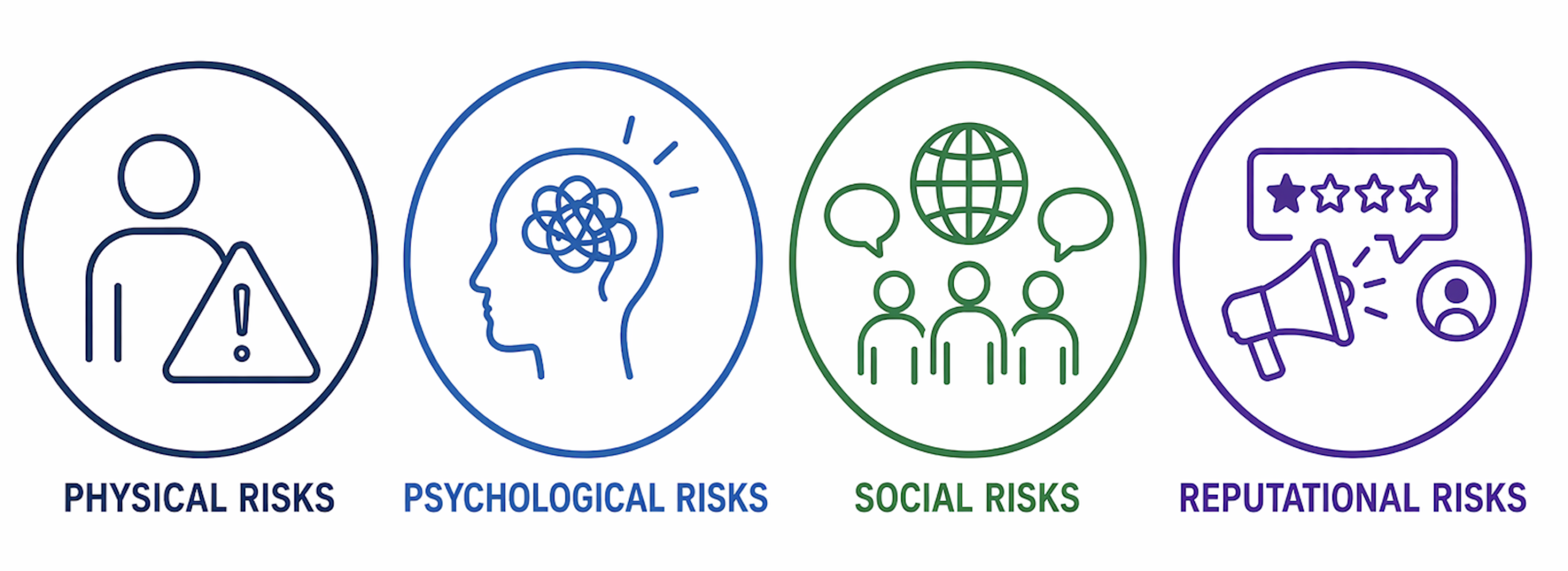
Key participant risks addressed by minimizing harm
Minimizing harm involves attention to different dimensions of participant well-being. These dimensions help researchers reflect on how visual data may affect individuals and communities in different ways.
Visual data, identifiability, and representation
Visual materials often contain elements that make individuals or contexts recognizable. This includes not only faces, but also environments, objects, or social situations. For this reason, researchers need to reflect on:
- whether and how participants may be identifiable
- when anonymization is appropriate
- how visual representation relates to participants’ agency
Beyond the visible image
Minimizing harm also means looking beyond what is immediately visible. Visual data may include additional elements that require attention, such as:
- metadata (e.g., time, location, device information)
- traceability across platforms
- connections to broader digital environments
These aspects should be considered when planning data collection, storage, and future sharing, as they shape how visual data can be interpreted and circulated.
Sensitivity over time
What is appropriate at one moment may change over time due to shifts in social, political, or legal contexts. Minimizing harm therefore includes anticipating how visual materials may be perceived or used in the future and integrating this awareness into early research decisions.
Sensitive and emotionally demanding contexts
When visual research involves sensitive topics or emotionally demanding contexts, researchers should adopt a particularly careful approach. This includes reflecting on:
- whether certain visual materials should be included at all
- how they are presented
- how they may affect participants, researchers, and audiences
The goal is to engage with it responsibly and with awareness of its implications.
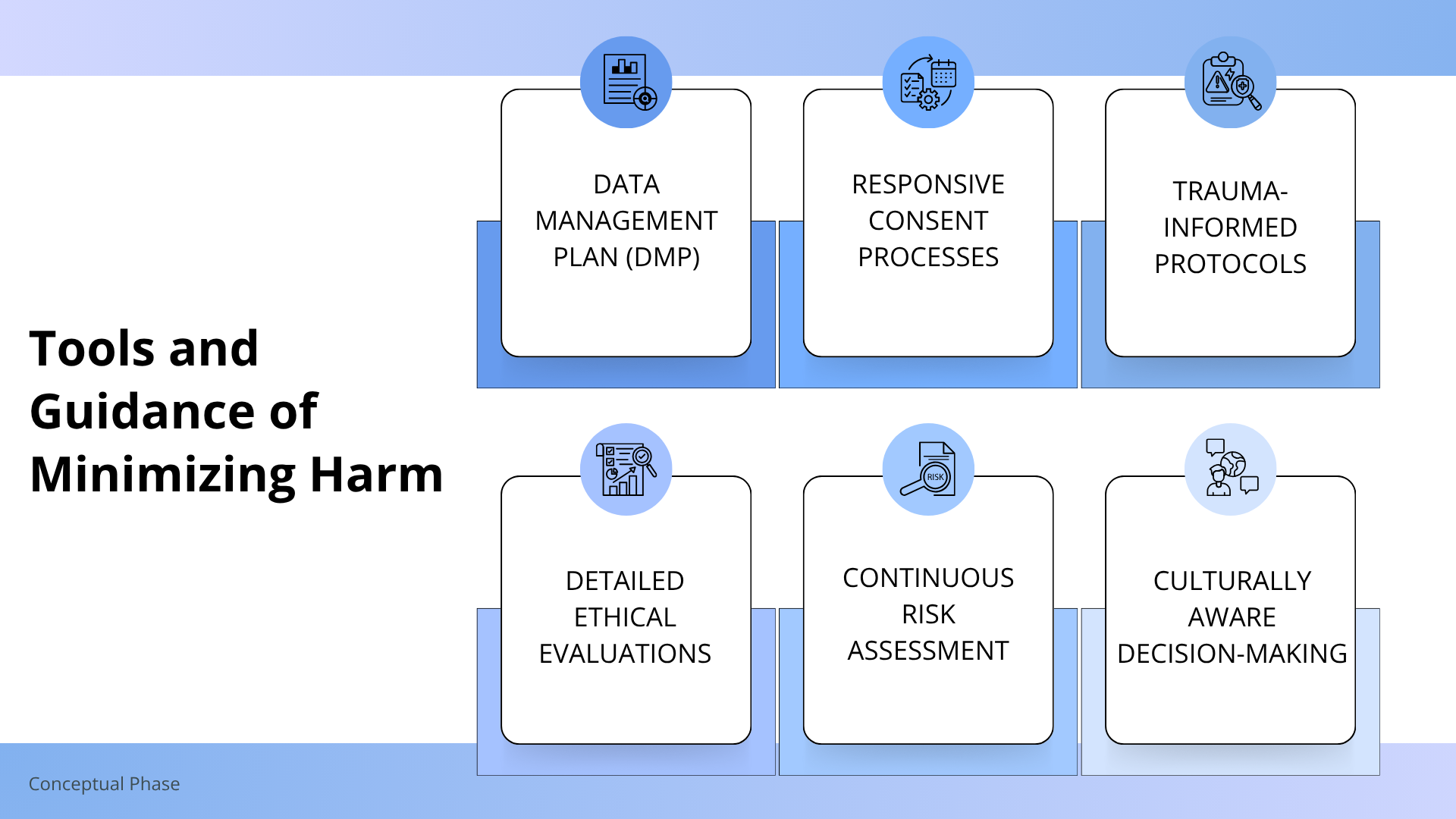
A continuous commitment
Minimizing harm should not be understood as a one-time decision taken at the beginning of a project. It is an ongoing commitment that accompanies the entire research process and must be revisited at key moments, particularly when preparing data for publication, archiving, and sharing.